Hydraulic calculation is a foundational pillar of column and tower design, serving as the critical link between process performance requirements and mechanical engineering implementation. Beyond defining core operational parameters (including pressure drop, flooding/loading limits, weeping, entertainment, and residence time), hydraulic analysis dictates the geometric and mechanical design of column internals—ensuring optimal liquid-vapor contact, minimal energy loss, and stable operation across the entire turn-down range (30-110% of design capacity).
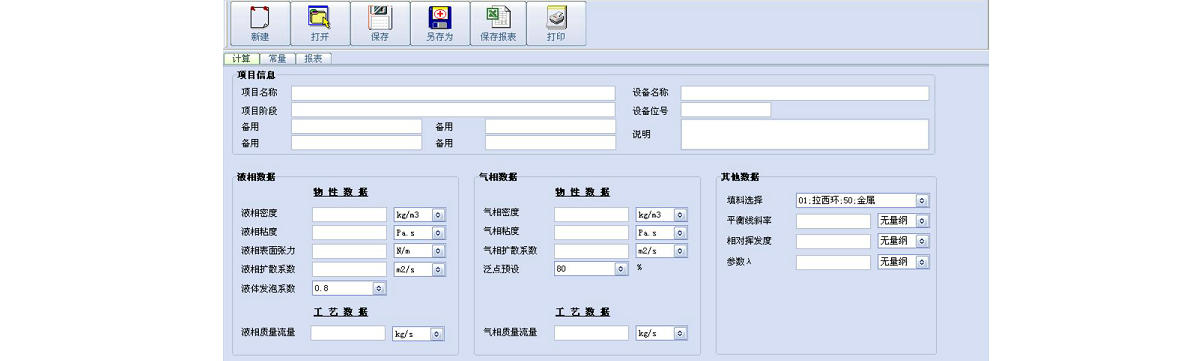
At Saiptech, our hydraulic calculation capabilities are built on a dual foundation of industry-proven correlations (Fair, Kister, Bolles, and Bravo) and in-house proprietary software, specifically calibrated for our full portfolio of internals products:
-
Tray Hydraulics: Calculations for sieve, valve, bubble cap, and high-efficiency trays (including hole size/pitch, weir height/length, downcomer dimensions, and liquid hold-up).
-
Packed Column Hydraulics: Analysis of structured (Mellapak, Flexipac) and random (Pall ring, Intalox) packing—covering pressure drop, liquid distribution uniformity, flooding velocity, and mass transfer efficiency.
-
Separation Internals: Hydraulic design of mist eliminators, demisters, coalescers, and feed/distribution trays to minimize pressure drop while maximizing entertainment removal efficiency (>99.9%).
Our proprietary software integrates real-world operational data from over 500+ installed columns across petrochemical, refining, and specialty chemical industries, enabling predictive accuracy within ±5% of actual plant performance. All hydraulic calculations are validated through pilot-scale testing in our dedicated hydraulic test facility, where we simulate extreme operating conditions (high viscosity, foaming fluids, high solids content) to ensure mechanical robustness and process reliability.


